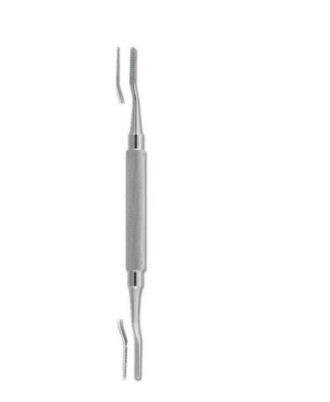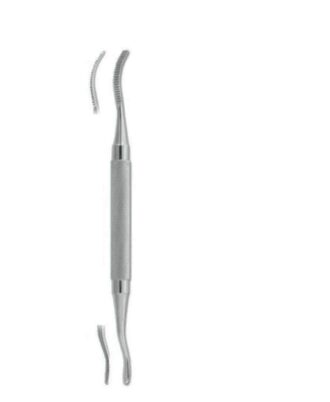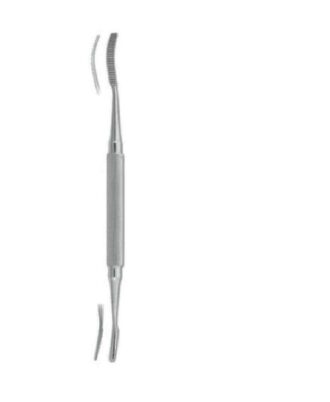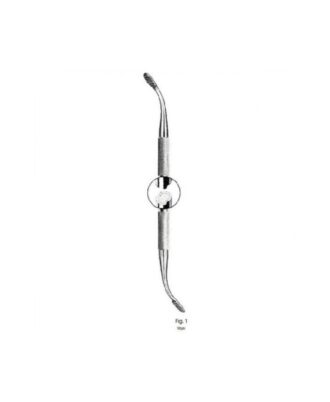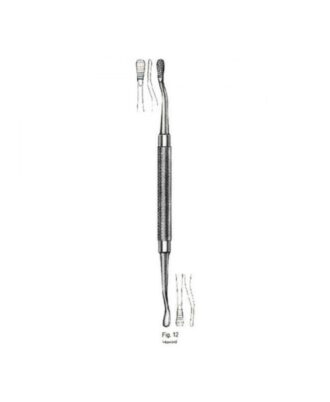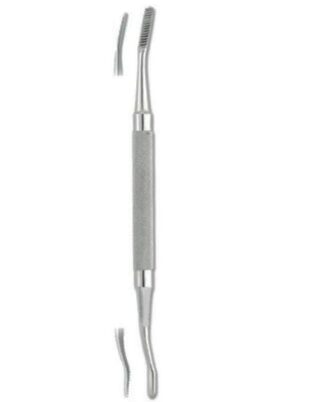
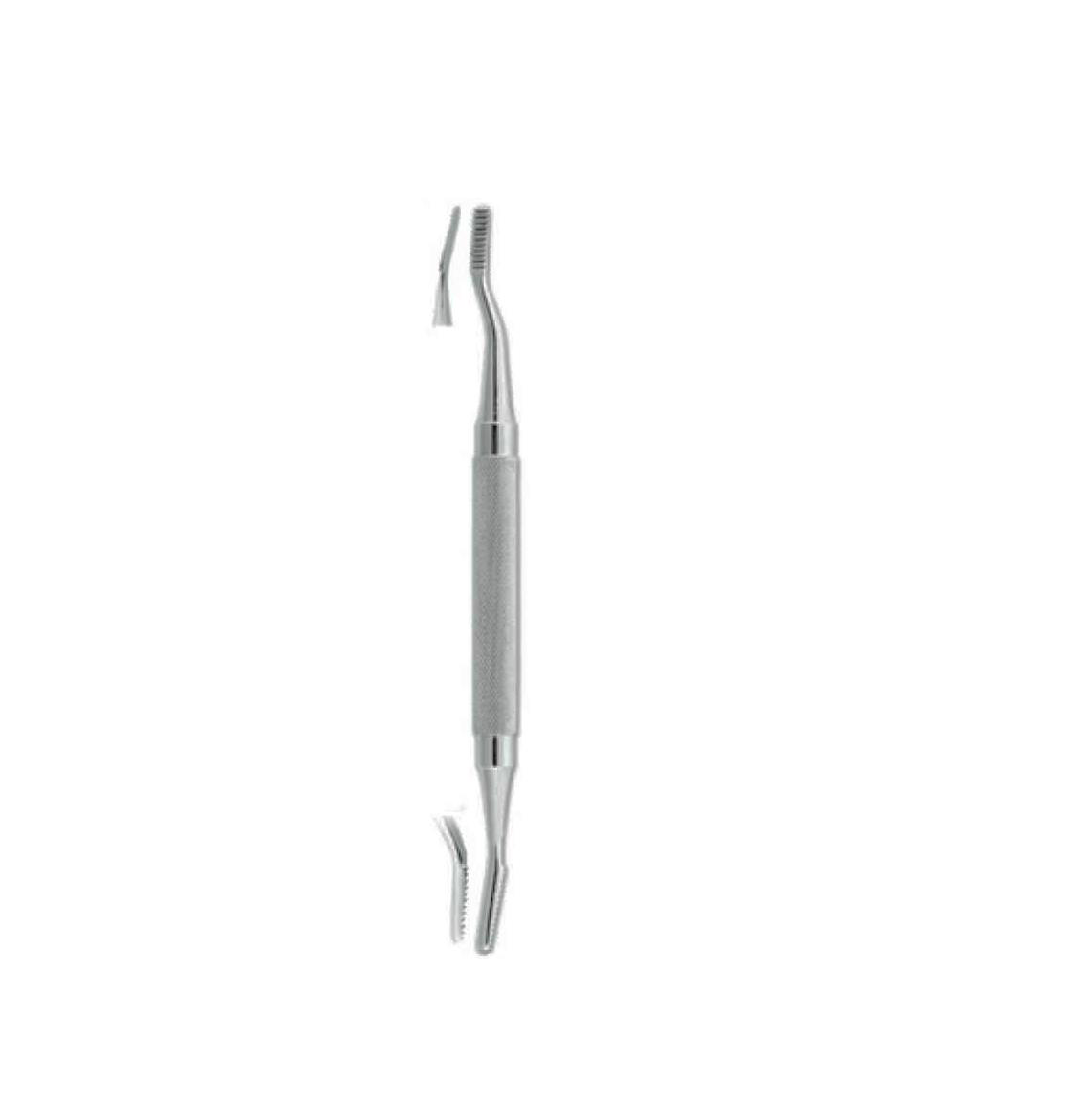
Bone Files fig 33
Figure 33 illustrates bone files, which are specialized hand instruments commonly used in oral surgery, orthopedics, and dental procedures for shaping, smoothing, and refining bone surfaces after cutting or trimming. These instruments play an essential role in achieving a regular, contoured, and physiologically acceptable bone structure, especially after procedures such as tooth extraction, alveoloplasty, or corrective jaw surgery.
Bone files typically consist of a sturdy handle attached to a working end with a serrated or rasp-like surface. The working surface may be single-cut or double-cut, allowing efficient removal of small irregularities from bone. The design enables the surgeon to carefully smooth sharp edges or rough areas without causing unnecessary trauma to surrounding tissues. Figure 33 likely depicts different types or sizes of bone files, showing variations in shape that allow access to different anatomical regions within the oral cavity or surgical site.
In clinical practice, bone files are used after bone cutting instruments such as chisels or burs have performed the primary reduction. Once major reshaping is completed, the bone file is gently stroked across the surface to remove fine spicules and irregularities. This step is important because rough bone edges can delay healing, irritate soft tissues, and compromise the fit of prosthetic devices such as dentures or implants.
The use of bone files requires controlled, light pressure and precise movements. Excessive force is avoided to prevent unnecessary removal of healthy bone or damage to delicate anatomical structures. Surgeons often use irrigation during the procedure to maintain a clear field and reduce heat or debris accumulation.
Bone files are typically manufactured from high-grade stainless steel, ensuring durability, corrosion resistance, and the ability to withstand repeated sterilization cycles. Their ergonomic handles are designed for secure grip and enhanced control during delicate surgical manipulation.
Overall, Figure 33 highlights the importance of bone files as finishing instruments in surgical procedures. They contribute significantly to smooth bone contours, improved healing outcomes, and better functional and aesthetic results in both dental and orthopedic applications.
Related products