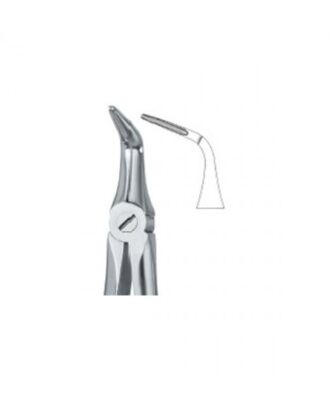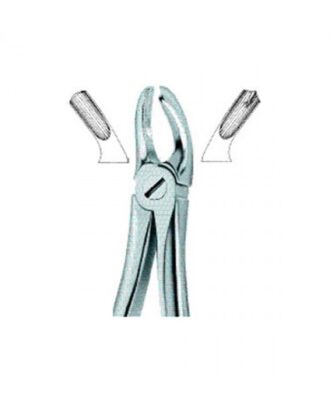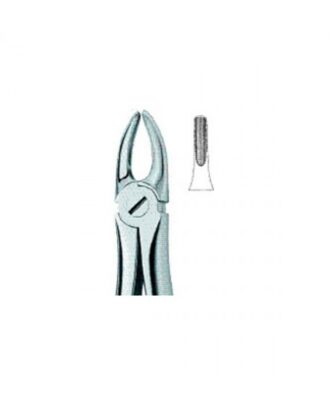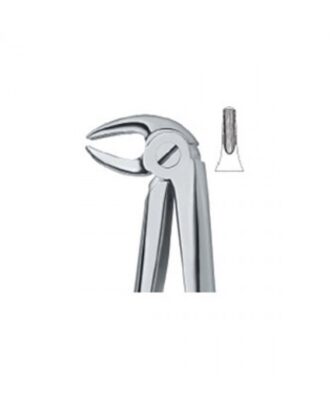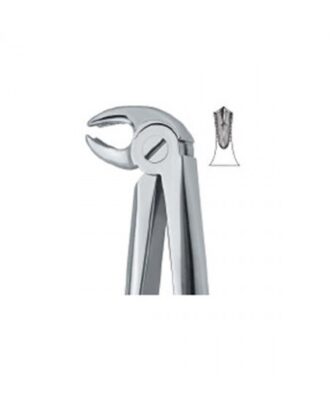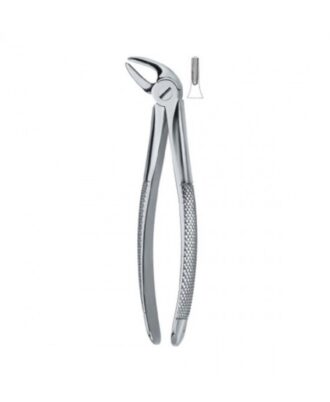
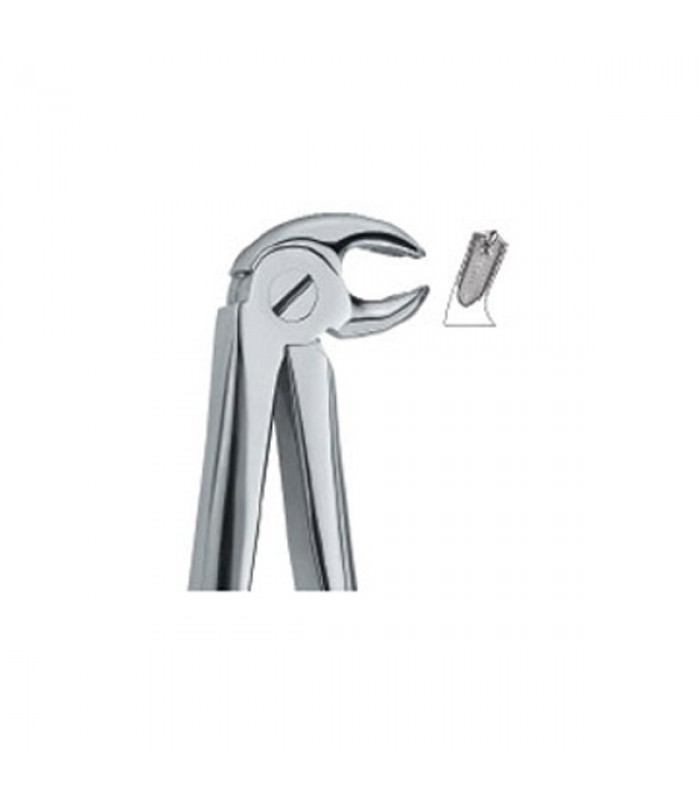
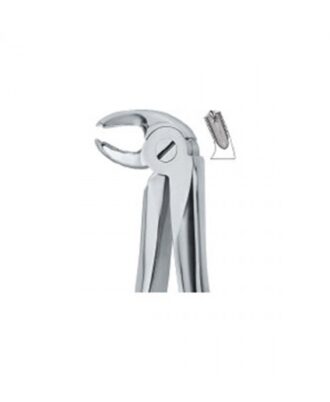
anterior forceps
Anterior forceps are essential dental instruments specifically designed for the extraction of front teeth, including incisors and canines. These teeth are located at the front of the mouth and typically have single, relatively straight roots, which require a precise and controlled approach during extraction. Anterior forceps are uniquely shaped to accommodate these characteristics, making the procedure safer and more efficient for both the dentist and the patient.
The working ends of anterior forceps, known as beaks, are narrow and finely contoured to fit around the tooth at the cervical region, near the gum line. This design ensures a firm and stable grip, reducing the risk of slipping or fracturing the tooth during extraction. A secure hold is crucial, as it allows the dentist to apply controlled pressure and perform gentle movements to loosen the tooth from the surrounding periodontal ligament.
The handles of anterior forceps are ergonomically designed to provide comfort and control during use. They allow the dentist to apply steady force with minimal effort, improving accuracy and reducing hand fatigue during procedures. The alignment of the handles and beaks also supports proper wrist positioning, which is important for maintaining precision and avoiding unnecessary strain.
Anterior forceps are available in different variations to suit extractions in the upper (maxillary) and lower (mandibular) jaws. Maxillary anterior forceps are typically straight, providing direct access to upper front teeth, while mandibular anterior forceps may have a slight curve to better adapt to the shape and positioning of lower teeth.
These instruments are usually made from high-quality stainless steel, ensuring durability, corrosion resistance, and ease of sterilization. Maintaining strict hygiene standards is critical in dental practice, and anterior forceps are designed to withstand repeated sterilization without compromising performance.
Overall, anterior forceps play a vital role in dental procedures by enabling safe, controlled, and efficient removal of front teeth. Their specialized design helps minimize trauma to surrounding tissues, supports faster healing, and contributes to successful patient outcomes in dental care.
Related products